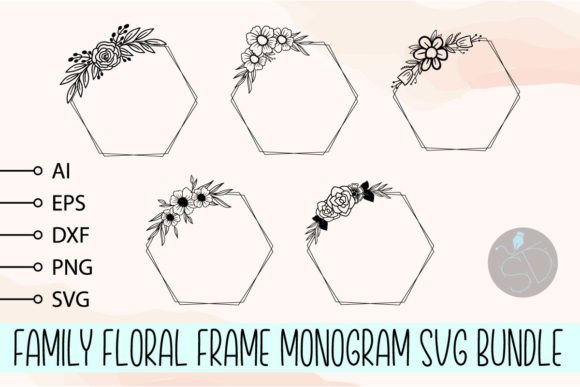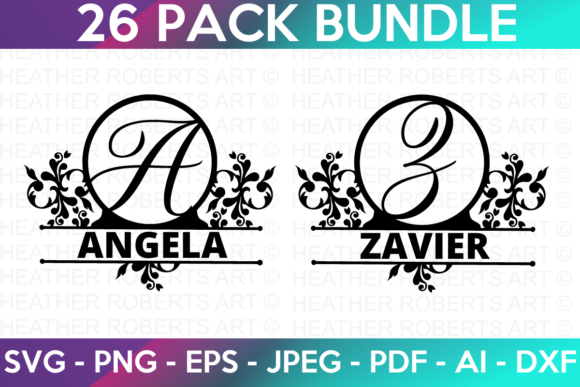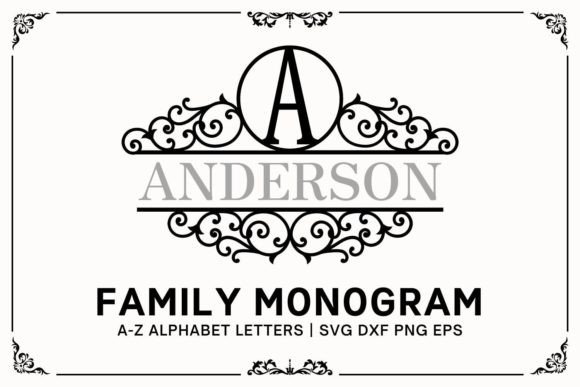
Family Monogram SVG: Graphics for Crafts & Branding
As a brand designer who spends most of my week refining visual identities for local businesses, I approach every new graphic design asset with a critical eye. It is not enough for a file to look pretty on a screen; it must hold up under the scrutiny of print production, packaging constraints, and real-world customer interaction. Recently, I evaluated the Family Monogram SVG Last Name Monogram collection with a specific project in mind: a rebrand for "Hearth & Honey," a local artisanal candle and home fragrance business. My goal was to determine if these files could serve as more than just decorative elements for hobbyists, potentially acting as foundational components for professional small business branding.
Upon opening the files, the first impression was one of structured elegance. Unlike many monogram frames that lean heavily into overly ornate Victorian styles or ultra-modern minimalism, this collection strikes a balance that feels both established and approachable. The mood it creates is distinctly warm and inviting, suggesting a brand personality that values tradition, family, and craftsmanship. For a local business like a bakery, a florist, or a boutique clothing store, this aesthetic signals trustworthiness. It feels premium without being inaccessible, making it an excellent candidate for brands that want to convey a "handmade with love" narrative while maintaining a polished, commercial appearance.
Elevating Product Packaging and Label Design
The true test of any SVG design is its application in packaging design. For the Hearth & Honey project, I envisioned using the monogram frame as a central hero graphic on the product label. Because the lines are clean and the negative space is well-managed, the asset scales remarkably well. When applied to a 2-inch round sticker on a soy wax jar, the details remained crisp, avoiding the pixelation issues often found in lower-quality raster images. This clarity is crucial for product label legibility, ensuring that the brand name inside the frame is readable even from a distance on a crowded retail shelf.
Beyond the primary label, these graphics offer immense versatility for secondary packaging elements. I successfully integrated the monogram into hang tags, thank-you cards, and tissue paper seals. In each instance, the frame acted as a unifying visual anchor, creating a consistent brand identity across different touchpoints. For handmade business owners, this consistency is vital. It transforms a simple transaction into a branded experience, fostering stronger emotional connections with customers. Whether used as a wax seal stamp design or embossed directly onto cardboard boxes, the asset adds a layer of sophistication that elevates the perceived value of the product.
Strategic Applications in Marketing Visuals
In the realm of digital marketing, the utility of the Family Monogram SVG Last Name Monogram extends far beyond physical goods. For social media managers and creative entrepreneurs, these files are gold mines for creating cohesive social media graphics. I utilized the frame to create profile picture overlays and story highlight covers, instantly giving the brand's online presence a curated, professional look. The vector nature of the file allows for infinite scaling, meaning the same graphic can be used for a tiny Instagram icon or a massive website banner without loss of quality.
Furthermore, these graphics excel in seasonal campaign visuals. Because the frame is distinct yet neutral enough to adapt, it can be paired with various color palettes and typography styles to match holidays or sales events. For a product mockup used in advertising, placing the monogram prominently helps with immediate product recognition. It acts as a visual shorthand for the brand, allowing customers to identify the maker before they even read the text. This kind of visual hierarchy is essential for cutting through the noise in crowded digital marketplaces and feeds.
Critical Considerations for Professional Use
While the potential is high, a responsible designer must also identify where an asset might fall short. The Family Monogram SVG Last Name Monogram is decorative by nature, which means it should be used carefully in contexts requiring strict formality or extreme minimalism. For instance, it may not be suitable for corporate legal documents or tech startups aiming for a stark, utilitarian aesthetic. Additionally, caution is required when placing these frames on very small labels or areas crowded with ingredient lists and legal disclaimers. In such tight spaces, the decorative elements can compete with important text, reducing readability and violating labeling regulations.
It is also important to consider contrast. These frames often rely on line weight to define their shape. If placed on a low-contrast background or a busy patterned texture, the details can get lost. For luxury minimalist brands that rely on subtle tonal shifts, this asset might be too bold. The key is to ensure the decoration supports the message rather than overpowering it. In editorial design or complex layouts, the monogram should act as an accent, not the sole focus, unless the brand strategy specifically calls for a heraldic or emblem-centric identity.
Designer Notes and Technical Evaluation
Before integrating any design assets into a client project, rigorous testing is non-negotiable. My workflow involved testing the Family Monogram SVG Last Name Monogram on real packaging mockups to verify how the lines rendered in print. I checked the black and white usage to ensure the design held up without color, a common requirement for cost-effective shipping labels or newspaper ads. I also previewed the files at small sizes to confirm that the intricate parts of the frame did not merge or disappear.
Typography pairing is another critical factor. I tested the monogram beside serif, sans serif, script, handwritten, and display font styles. The frame proved surprisingly versatile, complementing both classic serif fonts for a traditional look and modern sans serifs for a contemporary twist. However, pairing it with overly decorative scripts sometimes resulted in visual clutter, so simplicity in typography often yielded the best results. From a technical standpoint, inspecting the SVG code revealed clean paths and proper grouping, making it easy to edit colors and stroke weights in vector software. For those using Canva template workflows or Cricut and Silhouette machines for physical signage, the file compatibility appeared robust.
Finally, and perhaps most importantly, always confirm the commercial license before using these files for client work or physical product sales. While the description hints at crafting wood signs for home use, applying them to commercial design projects like product packaging requires explicit permission to sell items featuring the design. Ensuring you have the right commercial license protects your business and your clients from legal issues. When used correctly and legally, this graphic design asset is a powerful tool for enhancing professional branding, improving shelf appeal, and building a memorable identity for local businesses.